
New Puppy Checklist Australia: Everything You Need in 2026
Bringing a puppy home is one of life’s great joys — and one of its most overwhelming moments. There’s so much to buy, prepare and learn that it’s easy to either overspend on things you don’t need or forget essentials entirely. This checklist covers everything an Australian puppy owner actually needs, with practical advice on what to prioritise and what to skip.
Sleeping and Rest
Your puppy will sleep 18-20 hours a day in their first few months. A designated sleeping area with the right bed sets the foundation for good habits and restful nights.
- A quality puppy bed: Choose a bed sized for your puppy’s expected adult dimensions — not their current size. Growing puppies change fast, and you’ll replace an undersized bed within weeks. For puppies that chew, a raised bed with a mesh surface is far more resistant to destruction than foam or fabric. For calm puppies, a bolster bed like the Coco Cosy provides the security and warmth they crave.
- A crate (optional but recommended): Crate training gives your puppy a den-like safe space and helps enormously with toilet training. Size the crate for their adult dimensions with a divider panel to make it appropriately snug during puppyhood.
- Blankets: A couple of soft blankets for the bed and crate. Ask the breeder for a blanket with the scent of the litter — this familiar smell helps puppies settle in a new environment.
Safety and Containment
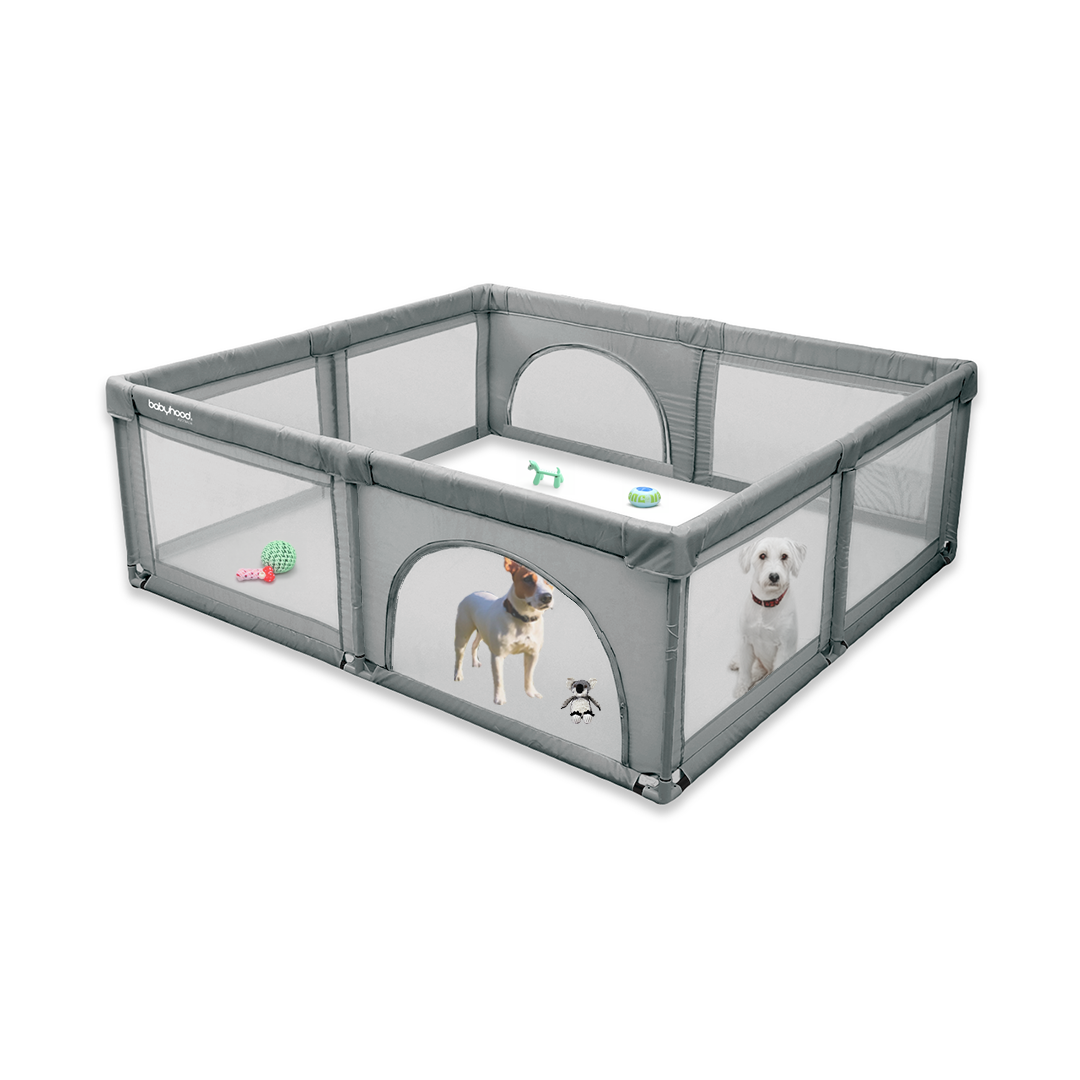
- A play pen: Essential for the first few months. A pet play pen gives your puppy a safe, contained area when you can’t directly supervise — preventing access to electrical cords, toxic plants and furniture legs. The Pethood Pop Up Play Pen sets up in seconds and folds flat when not needed.
- Baby gates: Block off rooms and staircases until your puppy is old enough and trained enough for full house access.
- Puppy-proofing supplies: Cord covers, cabinet locks, and a secure bin lid. Puppies investigate everything with their mouths.
Feeding
- Food and water bowls: Stainless steel or ceramic are easiest to clean and most hygienic. Avoid plastic — it harbours bacteria and some puppies develop allergic reactions to plastic bowls.
- Puppy food: Continue whatever food the breeder was using for the first week, then transition gradually to your chosen brand over 7-10 days to avoid digestive upset. In Australia, look for Australian-made brands that meet AAFCO nutritional standards for growth.
- Treat pouch: You’ll go through a lot of treats during training. A pouch on your belt keeps them accessible without fumbling in pockets.
Health and Hygiene
- Vet appointment: Book your first vet visit within the first week of bringing your puppy home. They’ll need vaccination boosters, a health check, and parasite prevention.
- Flea, tick and worm prevention: Essential in Australia, especially in tick-prone areas along the eastern seaboard. Your vet will recommend age-appropriate products. Paralysis ticks are a genuine emergency — know the signs and have your vet’s after-hours number saved.
- Pet insurance: Consider taking out a policy in the first few weeks while your puppy is healthy. Pre-existing conditions are excluded, so insuring early gives you the broadest coverage. Australian providers include Petplan, RSPCA Pet Insurance, and Pet Insurance Australia.
- Microchipping: Mandatory in all Australian states and territories. Most breeders microchip before handover — confirm this and register your details with the relevant state registry.
- Grooming basics: A puppy brush, nail clippers, and dog-specific shampoo. Start grooming routines early so your puppy becomes comfortable with handling. A foldable pet bath makes home bathing much easier as they grow.
Walking and Identification
- Collar and ID tag: A legal requirement across Australia. The tag must include your dog’s name and your phone number at minimum. Most councils also require registration details.
- Lead and harness: Start with a lightweight harness for puppies — it’s gentler on growing necks and gives you more control than a collar alone. A 1.5-1.8 metre lead is standard.
- Poo bags: Stock up. You’ll use more than you expect.
Toys and Enrichment
- Teething toys: Puppies teeth between 3-6 months and will chew anything they can reach. Provide appropriate chew toys to redirect this behaviour away from your furniture and shoes.
- Interactive puzzle toys: Kong-style toys stuffed with treats keep puppies mentally stimulated and help build problem-solving skills. These are especially valuable when you need to leave your puppy alone.
- Soft toys: The Pethood Aussie Collection offers beautifully crafted plush toys that are perfect for gentle play and comfort. Many puppies adopt a soft toy as a companion, carrying it to bed with them.
Training Essentials
- Puppy training pads: Useful for the first few weeks of toilet training, especially for apartment dwellers or during rainy weather.
- Enzymatic cleaner: Accidents happen. An enzymatic cleaner breaks down the proteins in urine that regular cleaners miss — preventing your puppy from returning to the same spot.
- Training treats: Small, soft, high-value treats your puppy can eat quickly without distraction. Use them for positive reinforcement during basic obedience, toilet training and socialisation.
- Puppy school: Enrol in a local puppy class. Socialisation between 8-16 weeks is critical for developing a well-adjusted adult dog. Most Australian vets and pet stores can recommend local trainers.
What You Don’t Need Yet
It’s tempting to buy everything at once, but these items can wait:
- An expensive permanent bed: Wait until your puppy is past the chewing phase (around 12 months) before investing in a premium fabric bed. A durable raised bed works well during puppyhood and beyond.
- Excessive clothing: Most Australian dogs don’t need jackets or boots except in specific cold-weather situations.
- A dog door: Wait until your puppy is toilet trained and you trust them with unsupervised outdoor access.
The First Week at Home
The first week sets the tone for everything that follows. Keep things calm and consistent:
- Establish a feeding, sleeping and toilet schedule from day one
- Take your puppy outside to their toilet spot every 1-2 hours and immediately after waking, eating and playing
- Let them explore one room at a time, gradually expanding their access as they prove trustworthy
- Keep visitors to a minimum for the first few days — too much stimulation overwhelms puppies and disrupts settling
- Place their bed in your bedroom for the first few nights if they’re distressed — the proximity helps them feel secure in a new environment
Browse the full range of Pethood dog beds, play pens and pet toys to set up the perfect environment for your new puppy.
Frequently Asked Questions
How much does it cost to set up for a new puppy in Australia?
Budget approximately $500-$1,000 for initial setup costs including bed, crate, bowls, lead, collar, food, toys, vet visit and parasite prevention. Ongoing monthly costs (food, insurance, preventatives) typically run $100-$200 depending on size and breed.
When can I take my puppy outside?
Your puppy can go into your own secure backyard immediately. For public areas — parks, footpaths, dog-friendly shops — wait until 1-2 weeks after their final vaccination (usually around 14-16 weeks). Your vet will confirm when it’s safe based on your local area’s disease risk.
Should I crate train my puppy?
Crate training is widely recommended by Australian vets and trainers. A crate provides a safe den space, aids toilet training, prevents destructive behaviour when unsupervised, and keeps your puppy secure during travel. The key is introducing the crate positively — never use it as punishment. A play pen can complement crate training by providing a larger contained area during the day.