How to Choose the Right Size Dog Bed (With Size Chart)
Buying a dog bed that’s the wrong size is one of the most common mistakes pet owners make. Too small and your dog hangs off the edges, losing support where they need it most. Too large and they lose the cosy, secure feeling that helps them sleep deeply. Getting the size right is simple — it just takes a quick measurement and an understanding of how your dog sleeps.
How to Measure Your Dog for a Bed
The most reliable method is to measure your dog while they’re lying in their natural sleeping position — not standing up.
For Dogs That Stretch Out
Wait until your dog is lying flat on their side with legs extended. Measure from nose tip to the base of the tail (not the tail tip). Add 15-20 centimetres to this length. That’s the minimum bed length you need. For width, measure from the spine to the outstretched paws and double it, then add 10cm.
For Dogs That Curl Up
Measure the diameter of your dog’s curled-up position — from one side to the other. Add 10-15 centimetres. For round beds like the Rumi Round or bolster beds like the Coco Cosy, this curled diameter is more important than nose-to-tail length.
Pethood Dog Bed Size Chart
Use this guide to match your dog’s weight and breed type to the right Pethood bed size:
Small Beds
Best for: Dogs under 8kg — Chihuahuas, Maltese, Pomeranians, Toy Poodles, Italian Greyhounds, and most cats.
Pethood options: Luna Oval Small in velvet or boucle. The compact oval shape provides a cosy nest without overwhelming smaller frames. Also suitable for kittens and small cats.
Medium Beds
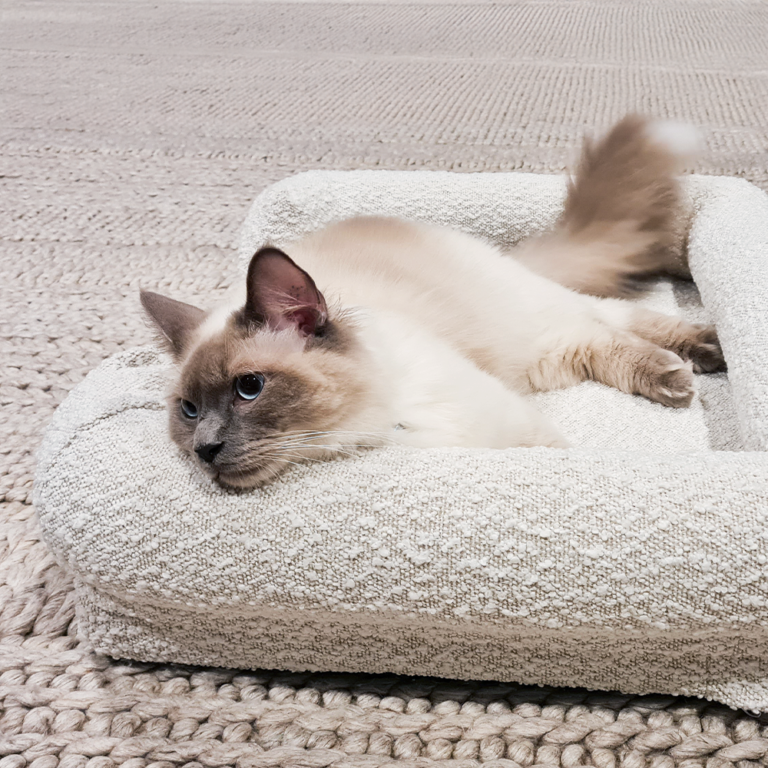
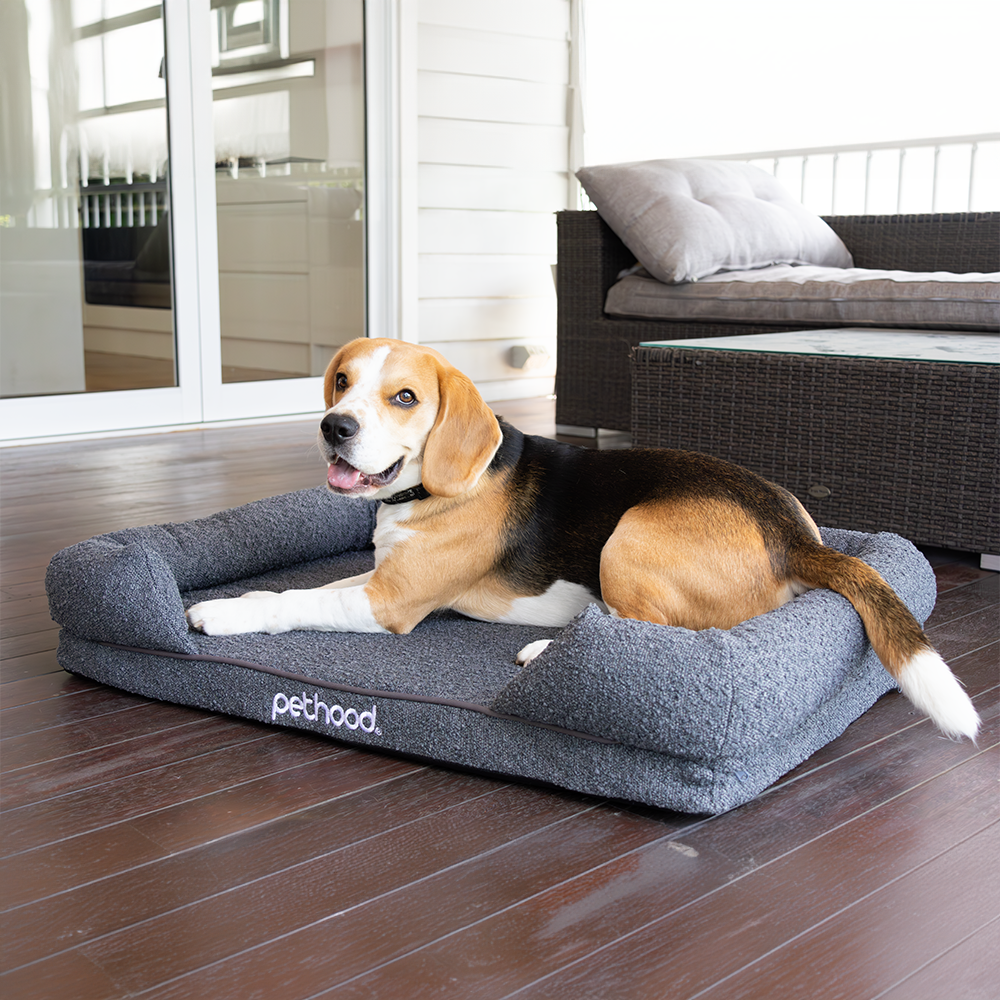
Best for: Dogs 8-20kg — Cavoodles, Cocker Spaniels, Beagles, Miniature Schnauzers, French Bulldogs, Staffies, Border Collies and most adult cats.
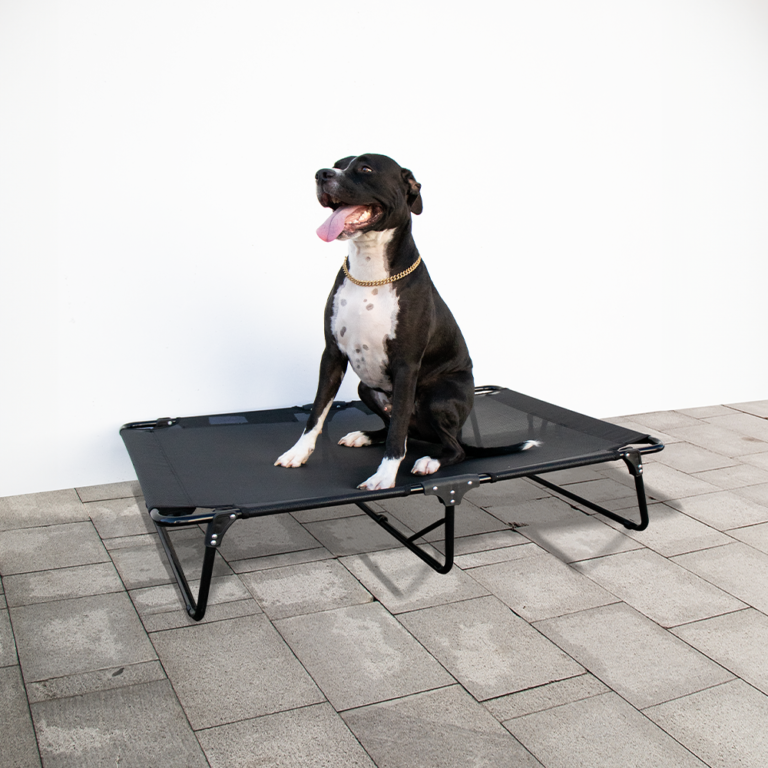
Pethood options: Coco Cosy Medium (deep-sided bolster), Rumi Round Medium (round timber frame), or Rocky Raised Medium (elevated mesh). Medium is the most versatile size and suits the majority of Australian household pets.
Large Beds
Best for: Dogs 20-35kg — Labradors, Golden Retrievers, Staffies (larger), Border Collies (larger), Australian Shepherds, Dalmatians, Standard Poodles.
Pethood options: Coco Cosy Large, Luna Oval Large, Rocky Raised Large, or Koda Folding. Large beds provide the extra room bigger breeds need to stretch and shift comfortably.
X-Large Beds
Best for: Dogs 35kg+ — German Shepherds, Rottweilers, Great Danes, Bernese Mountain Dogs, Irish Wolfhounds, Mastiffs.
Pethood options: Rocky Raised X-Large. For giant breeds, the elevated design is particularly important — it provides firm, even support for heavy joints and prevents the sagging that causes large dogs to “bottom out” on cushion beds.
Sleeping Style Affects Size Choice
Your dog’s sleeping position matters as much as their physical measurements. A dog that curls up may fit perfectly in a medium bed, while the same dog stretched out needs a large. Here’s how to factor sleeping style into your decision:
Side sleepers and sprawlers: Size up. These dogs use every centimetre of bed space and often hang limbs over edges. Always measure in the stretched position and go one size larger if you’re between sizes.
Curlers and donuts: Size based on curled diameter. Round and bolster beds like the Rumi and Coco Cosy are designed for this position — the raised edges provide support and the interior cradles the body. You don’t need to size up for curlers.
Position changers: Some dogs cycle between curling and stretching throughout the night. For these dogs, choose a bed that fits their stretched-out measurements — they’ll still feel comfortable when curled, but won’t be cramped when they stretch. An oval bed like the Luna Oval accommodates both positions well.
When in Doubt, Size Up
If your dog falls between two sizes, always go larger. A bed that’s slightly too big is comfortable — a bed that’s too small is frustrating. Dogs on a too-small bed often abandon it entirely, sleeping on the floor instead. The extra few centimetres of a larger size costs very little but makes a significant difference in whether your dog actually uses the bed.
Puppies: Buy for Adult Size
If you have a puppy, research their expected adult size and buy a bed to fit that measurement — not their current puppy size. Puppies grow fast, and a bed purchased for a 12-week-old Labrador will be useless within a few months. It’s better to have a bed that’s temporarily too large than to replace it every few weeks as your puppy grows.
For puppies still in the chewing phase, a raised bed with a durable mesh surface is a smart starting point — it’s far more resistant to destructive chewing than foam or fabric alternatives.
Frequently Asked Questions
What size bed does a Labrador need?
Most adult Labradors (25-36kg) need a Large bed. The Coco Cosy Large, Luna Oval Large or Rocky Raised Large all provide adequate room. For larger Labs that tend to sprawl, the Rocky Raised X-Large offers extra space.
Can a dog bed be too big?
For most dogs, a slightly oversized bed is perfectly fine and most dogs appreciate extra room. However, very anxious dogs sometimes feel more secure in a snugger bed where the bolster edges are close enough to touch their body. If anxiety is a concern, size more precisely.
Should I measure my dog standing or lying down?
Always measure lying down in their natural sleeping position. Standing measurements don’t account for how much space a dog actually uses when stretched out or curled up. The sleeping measurement is the one that matters for bed sizing.