
How to Bathe Your Dog at Home: A Step-by-Step Guide
Bathing your dog at home doesn’t have to be a wrestle. With the right setup, a calm approach and a few practical tips, you can turn bath time from a dreaded chore into a manageable routine — and save yourself regular trips to the groomer in the process.
This step-by-step guide covers everything from preparation to drying, with advice tailored for Australian pet owners dealing with our unique climate, outdoor lifestyles and common coat types.
Before You Start: What You’ll Need
Gather everything before you bring your dog near the water. Having to leave mid-bath to find shampoo while your wet dog shakes all over the bathroom is a scenario best avoided.
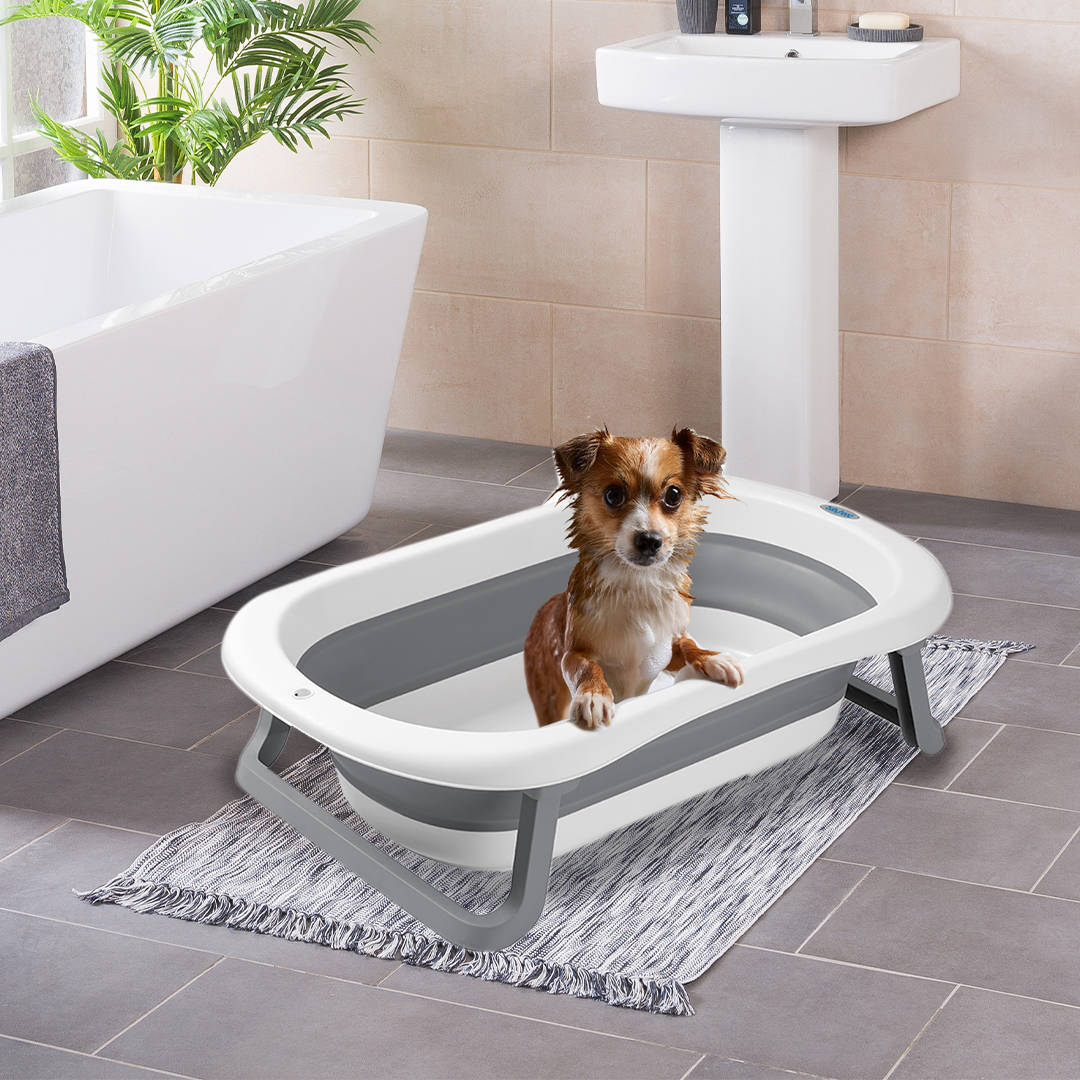
- A suitable tub or bath: A foldable pet bath is ideal — it’s the right height for comfortable washing, drains easily, and folds flat for storage. The Pethood Folding Pet Bath or Bubble Bath Tub are designed specifically for this purpose. Alternatively, use your own bathtub, a laundry trough, or bathe outdoors with a hose in warmer months.
- Dog-specific shampoo: Human shampoo disrupts the pH balance of your dog’s skin. Use a gentle, soap-free dog shampoo — oatmeal-based formulas work well for sensitive skin.
- Towels: At least two — one to stand on and one (or more) for drying. Microfibre towels absorb more water and dry faster than standard cotton.
- A brush or comb: For pre-bath brushing to remove loose fur and tangles.
- Cotton balls: To gently place in ears to prevent water entry.
- Treats: For positive reinforcement before, during and after the bath.
Step 1: Brush Before Bathing
Always brush your dog thoroughly before getting them wet. Loose fur that hits water turns into matted clumps that are much harder to remove once wet. Brushing first removes dead coat, distributes natural oils, and allows shampoo to penetrate through to the skin rather than sitting on top of a tangled layer of fur.
For double-coated breeds — Labradors, Golden Retrievers, Huskies, Australian Shepherds — use an undercoat rake to remove the dense underlayer before bathing. This makes a significant difference in both washing effectiveness and drying time.
Step 2: Set the Right Water Temperature
Use lukewarm water — roughly body temperature or slightly cooler. Dogs are more sensitive to water temperature than humans, and what feels comfortably warm to you can be uncomfortably hot for your dog. Test the water on your inner wrist before starting. In Australian summers, slightly cool water is refreshing and helps prevent overheating during the bath.
Step 3: Wet Thoroughly, Avoiding the Face
Start from the neck and work backwards, wetting your dog’s coat all the way to the skin. Thick or double coats take time to saturate — don’t rush this step, as dry patches underneath won’t get properly cleaned. Avoid pouring water directly over your dog’s head and face at this stage. Most dogs find water on the face stressful, and it’s easy to get water in their eyes and ears.
Step 4: Lather and Massage
Apply shampoo in sections — neck, back, sides, chest, legs, belly, tail. Work it into a lather with your fingers, massaging down to the skin. Don’t just scrub the surface fur. This is also a good opportunity to check for lumps, bumps, ticks or skin irritations that might not be visible through dry fur.
For the face, use a damp washcloth with a small amount of shampoo, gently wiping around the muzzle, cheeks and forehead. This gives you control and prevents shampoo from running into eyes.
Step 5: Rinse Completely
This is the most important step and the one most people cut short. Rinse until the water runs completely clear — no bubbles, no residue. Leftover shampoo causes itching, flaking and skin irritation. For thick-coated dogs, this can take several minutes of thorough rinsing. Pay particular attention to the belly, armpits and behind the ears where shampoo tends to linger.
Step 6: Dry Properly
Towel dry as much water as possible immediately after rinsing. Press and squeeze rather than rubbing — vigorous rubbing can tangle the coat and irritate skin. In Australia’s warmer months, air drying outdoors works well for short-coated breeds. For long or thick coats, a blow dryer on a cool or low-heat setting speeds things up — but never use high heat, which can burn sensitive skin.
Make sure your dog is fully dry before returning them to their bed. A clean, dry dog on a fresh Pethood dog bed is the perfect end to bath time.
How Often Should You Bathe Your Dog?
The right frequency depends on coat type, activity level and skin condition:
- Short-coated breeds (Staffies, Whippets, Boxers): Every 6-8 weeks unless they get particularly dirty
- Medium-coated breeds (Labradors, Golden Retrievers, Border Collies): Every 4-6 weeks
- Long-coated breeds (Maltese, Shih Tzus, Poodles): Every 3-4 weeks
- Oily-coated breeds (Basset Hounds, Cocker Spaniels): Every 2-3 weeks
- Active outdoor dogs: As needed — swimming, rolling in mud or beach visits warrant an extra bath
Over-bathing strips the natural oils that keep your dog’s coat healthy and skin moisturised. If your dog’s skin becomes dry or flaky, reduce bathing frequency and switch to a gentler, moisturising shampoo.
Making Bath Time Easier
Dogs that dislike baths are usually responding to past negative experiences. Building positive associations takes time, but these strategies help:
- Start young: Introduce puppies to bath time early. Gentle, calm first experiences set the tone for life.
- Use treats throughout: Reward calm behaviour before, during and after the bath.
- Stay calm yourself: Dogs read your energy. If you’re tense or rushed, they will be too.
- Use a non-slip surface: Dogs panic when their feet slip. Place a rubber mat or towel in the base of the tub.
- Keep sessions short at first: For anxious dogs, start with just wetting and treating, gradually building up to a full bath over several sessions.
- Invest in a proper setup: A dedicated pet bath at the right height reduces strain on your back and gives your dog a stable, consistent bathing environment. The Ergo Grouper Bath and Stand raises the tub to a comfortable working height.
Frequently Asked Questions
Can I use human shampoo on my dog?
No. Human shampoo has a different pH level that disrupts your dog’s skin barrier, leading to dryness, irritation and increased vulnerability to bacteria. Always use a shampoo formulated specifically for dogs.
Should I bathe my dog in cold water during summer?
Lukewarm is still best, even in summer. Very cold water can cause your dog to tense up and feel stressed. Slightly cool water is fine and refreshing, but avoid using water straight from a garden hose that’s been sitting in the sun — it can be scalding hot initially.
My dog hates baths. What can I do?
Gradual desensitisation works best. Start by rewarding your dog for simply being near the bath. Progress to standing in an empty tub with treats, then add a small amount of water over several sessions. Patience and positive reinforcement transform bath time from a battle into a routine. A lick mat with peanut butter stuck to the tub wall provides excellent distraction during washing.